Baseball cards have great importance among Americans. They are much more than printed pieces of cardboard. People feel that they bring back childhood memories. These cards also remind them of their favorite players and memorable moments in sports history. For collectors, baseball cards can also be highly valuable. But one detail that is often overlooked is the baseball card size. The correct card sizes help you store or display them securely. Moreover, this also makes it easy to pack these cards in custom packaging boxes without any difficulty. They are designed to carry cards and your sports goods elegantly.
Minor dimensional errors on baseball cards can cause bending, edge damage, or grading problems. In this guide, we will discuss baseball card dimensions in detail. It will make it easier for you to present your card correctly. Join us to know the perfect baseball card sizes for your brand.
What Is the Standard Baseball Card Size?
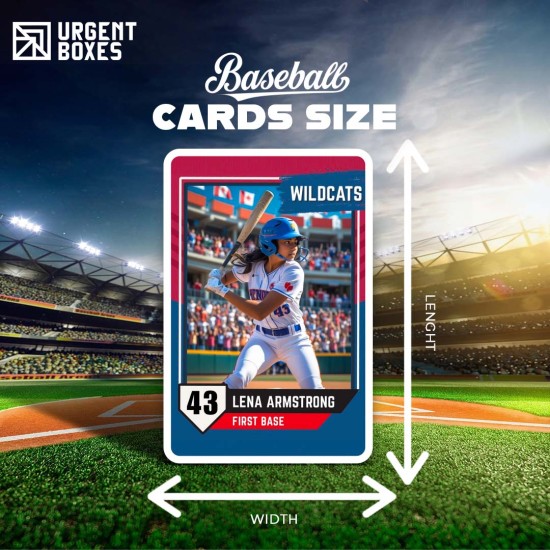
The standard baseball card size used worldwide is 2.5 inches × 3.5 inches. This size has been followed for decades by major card manufacturers, grading firms, and collectors. Because it's so common, almost all storage accessories—like sleeves, binders, top loaders, and magnetic cases—are designed to fit exactly this dimension.
The standard sizes of baseball cards are easier to handle, protect, exchange, and display. So, knowledge of the correct sizes helps you avoid costly mistakes and damage.
What is the Standard Baseball Card Size in Inches
Let’s start from the beginning. This is the standard baseball size in inches.
Width: 2.5 inches
Height: 3.5 inches
This measurement is always written as width × height. It is essential to keep this order consistent when placing a print order or designing a template.
What is the Standard Baseball Card size in Centimeters (cm)?
6.35cm x 8.89cm. This conversion is helpful for international printing and packaging. This is especially useful for manufacturers operating outside the United States.
What is the Standard Baseball Card Size in Millimeters (mm)?
63.5mm × 88.9mm. Millimeters are often used in professional printing and die-cutting. This will ensure precise trimming and perfect alignment.
What is the Standard Baseball Card Size in Pixels (for Digital Design)?
For high-quality digital artwork and prints, the baseball card is also available in pixels. 750×1050 pixels at 300 DPI. In this digital age, the pixel sizes ensure clear images, clean text, and correct edges.
Explore Standard Baseball Card Size Comparison Table
This baseball card size chart will make easier the understanding of card sizes.
| Measurement Unit |
Measurement Unit |
| Inches |
2.5" × 3.5" |
| Centimeters |
6.35 × 8.89 cm |
| Millimeters |
63.5 × 88.9 mm |
| Pixels (300DPI) |
750 × 1050 px |
Why Consistent Sizing Is Important?
Consistent sizing makes life easier for everyone involved. Collectors can safely store cards without worrying about fit. Designers can create layouts that print correctly. Printers can cut cards accurately with less waste. And grading companies can objectively assess cards against known standards. In short, standard sizes keep the entire baseball card world organized and predictable.
Why Baseball Card Size Matters for Collectors & Designers
The sizes of baseball cards are very significant. It ensures the safety and presentation of cards in best manners. The collectors and designers use correct dimensions to avoid different problems. This also helps to keep the cards in quality and exact shapes.
Proper Fit for Storage and Protection
The standard-size baseball card fits into sleeves, top loaders, binders, and rigid cases. When a card matches the correct size, it stays securely in place. There is no chance of card bending, sliding, or corner damage. However, if the card size is large or small, it will slide into the holder. It also causes damage.
Accurate and Fair Grading
Grading companies expect baseball cards to follow standard dimensions. If the card is cut incorrectly or is not a uniform size, it may have fewer points. It can also be rejected for grading. Accurate size centering ensures correct assessment of edges and corners. It also directly affects the card's character and value.
High Resale and Trade Value
Buyers trust cards that follow standard sizes. Correct dimensions indicate authenticity, care, and originality. Cards that do not fit standard holders often set off alarm bells for collectors, which can reduce demand and resale prices.
Proof of Authenticity
The correct size helps to confirm that the card has not been altered. Disrupted or altered cards are a common concern in the collecting market. Standard dimensions give you peace of mind that the card is original and untouched.
Precision in Digital Design
For designers, accurate dimensions are essential. The precise pixel size ensures that artwork prints cleanly, edges remain consistent, and text is not cut off. Precise digital templates also reduce printing errors and save time and money during production. In short, the size of baseball cards affects protection, grading, value, and design.
Other Baseball Card Sizes: Mini, Oversized & Custom Variations
While the standard size dominates the market, there are many other variations. These formats add creativity and charm, but they also require special care.
Mini Baseball Cards
Mini cards are smaller versions of standard cards. Popular sizes include:
Approximately 1.5" × 2.5."
These cards are like inserts or special editions. Collectors love them for their unique features, but they require custom sleeves and storage options.
Oversized Baseball Cards
Oversized cards are larger than standard and are often used for shows, promotion, autograph, limited edition. Sizes can vary widely, from 3.5" × 5" to larger. They look amazing, but are very difficult to store or protect.
Vintage Baseball Card Size
The older cards,, especially those from the early 20th century, did not have exact sizes. Vintage baseball cards have different dimensions. These distinctive sizes enhance the charm of baseball cards. These cards also have storage problems.
Brands sometimes use non-standard sizes for marketing or collector appeal. These custom dimensions help the cards stand out. Besides that, brands use playing card boxes to give them a sense of safety and a sunnier look. They help to avoid damage.
Storage Challenges for Non-Standard Cards
Cards in small and large sizes:
- Standard sleeves do not fit
- Requires a custom box or holder
- They are more likely to bend if stored incorrectly
- Protective packaging becomes essential when working with these formats.
Why Businesses & Collectors Prefer Custom Baseball Card Packaging
Custom packaging plays a significant role in safeguarding and presenting baseball cards.
Safe Storage Against Damage
Custom packaging prevents bending, corner wear, and surface scratches. This is particularly important during storage and shipping.
Better Branding
Companies can display logos, team colors, and artwork on the packaging. This builds brand identity and makes the products more recognizable.
Improved Unboxing Experience
A well-designed box creates excitement. Collectors like to open packaging that feels premium and thoughtful.
Safe Shipping
Custom boxes prevent cards from moving during transport. This reduces returns, complaints, and damage claims.
Supports Mini and Large Cards
Standard boxes do not work for non-standard sizes. Customized packaging enables safe storage of small, oversized, or specific cards.
Long-term Safe Storage
With quality packaging you can avoid the damaging factors like dust or moisture. It also protects the cards from light and retain its position.
Protect What Matters Most
Baseball cards have a long history. It may remind you of your first deck, a favorite childhood player, or a historic moment in sports. For collectors, these cards are more than paper and ink – they hold emotions, memories, and absolute value built over time. Protecting them means protecting a piece of sports history and the effort you put into your collection.
That protection starts with the right packaging. Custom baseball boxes protect cards from bending, dust, moisture, and handling damage. They also provide a sense of pride and presentation that standard storage cannot match. Explore different design options for packaging.
Conclusion
Baseball card size matters a lot for safety and the best display. The standard 2.5" × 3.5" size keeps cards organized and accessible. If the card size is small or large, it may affect the whole experience. Understanding baseball card dimensions will help you make better choices. At Urgent Boxes, we offer custom-sized baseball cards tailored to your needs. Our designers are ready to make creative themes that fit your brand. Get in touch with us to start customizing baseball cards or packaging at reasonable prices.
FAQs:
Q: What is the standard size of a baseball card?
The standard baseball card size is 2.5 inches × 3.5 inches. This size is ideal for storage and protection.
Q: Are all baseball cards the same size?
No, the sizes for baseball cards are different. Some brands prefer standard card sizes. However, some cards come in mini, oversized, vintage, or custom formats. These special sizes often require custom sleeves or packaging.
Q: Why does the size of a baseball card matter in grading?
Grading companies set the standard dimensions of baseball cards. If cards come in unusual shapes or are cut incorrectly, they will receive low grading.




![How to Measure Shoe Box Dimensions [Complete Guide]](https://assets.urgentboxes.com/storage/2409/conversions/STANDA~1-thumb-sm.JPG)