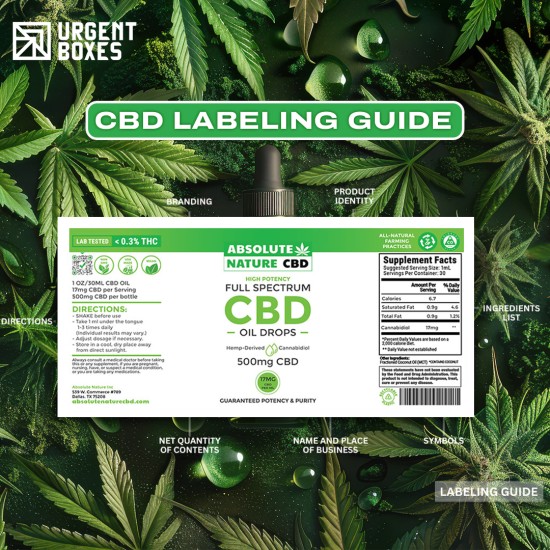
CBD is a hemp-derived compound that has quickly gained attention in global markets. It offers various benefits, so CBD products are everywhere now. You will find them in wellness stores, pharmacies, and online stores. The high competition in the CBD market stems from consumer demand for CBD products. So, this CBD labeling guide is essential to give customers peace of mind.
Real Advantages of CBD Products: Before we dive into CBD Labels first, we know the usage and benefits of these herbal products. CBD products are beneficial for relaxation, daily balance, and general wellbeing. It also comes in cosmetics, pharmaceuticals, or other products. The growing acceptance of CBD highlights the importance of labels. So, whether you are a consumer of CBD products or a manufacturer, the labeling guide benefits all.
What Are CBD Labels?
People buy the products that they can use with confidence. CBD labels are the guiding stars on CBD packaging for customers. It gives them an idea of what they are buying. These labels include product quantity, usage information, ingredient lists, and safety warnings. Simply put, the CBD label serves as product identification and proof of compliance.
Why CBD Packaging Labels Matter for the Brand?
A CBD product may look attractive, but the label is what really informs the buyer. These honest CBD packaging labels encourage customers to buy products. It builds consumers' trust and shows the product quality. They find the brand reliable and become loyal customers. It also helps businesses to meet regulations and stand out in a market.
For brands, the CBD Labeling Guide standards are not optional. Accurate labeling builds consumer confidence and protects businesses from legal penalties. It also ensures compliance with CBD labeling requirements and meets FDA hemp regulations, CFR Title 21, and DSHEA requirements. Well-structured CBD labels are necessary in the era of increased regulatory scrutiny. This will also determine whether your product will be successful or not on shelves.
The CBD label information matters a lot to earn customer trust. You must clearly show the necessary details to comply with regulations. In this way, you can give customers peace of mind while meeting regulatory requirements. Without the following information, you will face penalties or fines.
CBD concentration
The CBD concentration tells consumers how much CBD is in a product. It is usually listed in milligrams (mg) and can be shown as total CBD per package or per serving. Clear CBD strength labeling helps customers compare products and choose the right option for their needs. Incorrect concentration declarations can damage trust and create compliance concerns.
THC level
THC level labeling is essential for hemp-derived products, as it clearly displays the THC content and confirms compliance with the legal limit of 0.3% delta-9 THC. Accurate labeling helps consumers understand product potency and prevents issues after use. To ensure compliant and informative packaging, THC Delta Boxes are designed to present THC details clearly while maintaining regulatory standards.
Ingredient List
Customers have the right to know what they are consuming. The ingredient list shows what is in the product. So, mention all ingredients in descending order by weight. Provide information on the CBD origin, carrier oil, flavors, and any additives. With the ingredient list, customers who have allergies can avoid specific products.
Dosage Instructions
Dosage instructions are necessary to educate customers about the quantity of product to use. It guides consumers on how to use the product safely and effectively. This includes recommended serving sizes, use frequency, and application method. With clear dosage information, customers can avoid the harms of overdoses. It is essential for oils, tinctures, and capsules.
Warnings and Disclaimers
The CBD label should contain appropriate safety warnings and FDA disclaimers. Also mention the general instructions regarding child safety and avoid usage during pregnancy. You can guide consumers to seek advice from a professional before using the product. These warnings help manage risk and support label compliance.
Batch or lot Number
The batch or lot number helps brands trace a product. It helps to know when and where the product is made. This is necessary for quality control and laboratory testing. These batch numbers also support good manufacturing practices. Customers can know that the brand takes responsibility seriously.
Net Quantity
Labels also show the quantity of product to guide customers. This is mentioned in milliliters, grams, or ounces. The unit depends on the product type. With the correct net quantity, you can guide customers about fair prices. This makes brands reliable for consumers.
The CBD labels must show the product manufacturer and distributor. For this, mention the company name, its address, and contact details. This will enhance the product's credibility among others. It also makes it easy to contact the company at any time.
| Required Element |
Why It Essential |
| CBD Concentration |
Confirms product strength and transparency |
| THC Level Labeling |
Verifies hemp legality (≤0.3% THC) |
| Ingredient Disclosure |
Prevents allergic risk |
| Warnings & FDA Disclaimer |
Meets FDA labeling rules |
| Dosage Instructions |
Ensures safe and informed usage |
The CBD products are different, and their labels differ as well. These labels must show the product type and its exact use. Consumers read labels to understand cannabinoid content and THC exposure. It ensures label accuracy for legal and ethical compliance. Choosing the correct packaging also plays a key role in presenting this information clearly, which is explained in detail in "How to Choose the Right CBD Packaging".
Full-Spectrum: A full-spectrum label contains the presence of multiple cannabinoids, including trace-level THC. With the cannabinoid profile, you can avoid problems for THC-sensitive consumers.
Broad-spectrum: A broad-spectrum label shows several cannabinoids. It will show all except THC. Verification is conducted through third-party laboratory testing. So, it will strengthen brand transparency.
CBD Isolate Labeling: CBD isolate labeling should state that it contains only pure CBD, with no other cannabinoids. This will fascinate the customers who want a THC-free formulation.
Why is a COA (Certificate of Analysis) Required?
The Certificate of Analysis (COA) is vital to make the CBD label reliable. It gives you certainty about product safety and its potential benefits. This happens through independent laboratory testing.
The COA typically includes a cannabinoid panel, potency variance, microbial screening, and heavy metal testing. Instead of printing extensive data on labels, brands now rely on QR code labels. This helps you to link to digital lab reports. Let’s explore how these QR codes help your businesses.
How QR Codes Improve Transparency?
QR-coded authentication enhances transparency and supports compliance with CBD labeling regulations. It is essential in a competitive retail environment. Modern CBD labeling standards require this kind of certification. It confirms the product's effectiveness and stability. The independent laboratory testing proves it.
CBD Label Materials & Printing Options
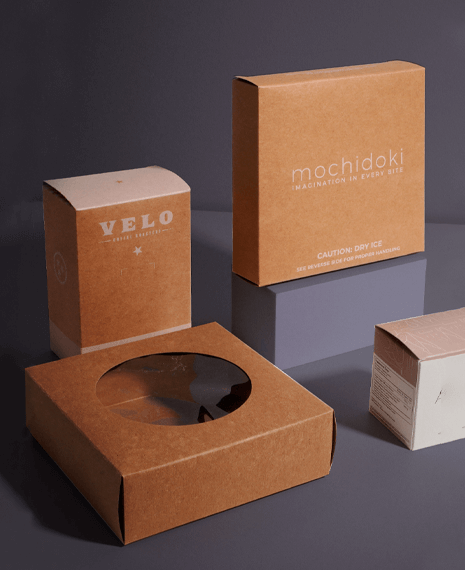
The durable CBD label Packaging enhances the brand image. The strong material options give your CBD labels strength. Good labels can withstand moisture, heat, and oils. They cannot get damaged in frequent handling. So, brands focus on using high-quality materials and the best possible finishing for labels.
The most popular materials are BOPP and vinyl labels. These are famous for their waterproof nature. Brands also apply finishing to provide high protection against external damage. The gloss or matte finish prevents humidity from affecting the shine. Advanced CBD label printing methods clearly display the information. You can also create a CBD label design that matches your brand colors. The use of CMYK printing or PMS color gives accuracy. For consistent branding, UV spot varnish is best. Pressure-sensitive labels are also made for wholesale packaging solutions.
Labeling Requirements for Different CBD Product Types
The labeling on CBD packaging boxes varies by product type. It depends on the product's nature and usage. Here we list the differences in each product's labeling for your convenience.
Oils and tinctures: These products require dosage instructions and usually list supplement facts. It also includes a nutrition facts panel formatting that depends on its usage.
Edibles: CBD edibles should contain nutrition facts panels and disclose allergens. This is in accordance with the FDA food labeling protocols.
Topicals: Topicals show warnings about external use and disclosure of cosmetic ingredients. For topicals, the ASTM child-safety protocols are also applicable.
Vape: The vape labels include safety warnings and age restrictions. Also, brands mention battery messages.
CBD Product Type Label Differences
| Product Type |
Label Focus |
| Oils and Tinctures |
Dosage, Ingredient Info |
| Edibles |
Allergens, Nutrient info |
| Topicals |
External Use Warning |
| Vapes |
Safety Restrictions |
Common CBD Labeling Mistakes to Avoid
Many brands fail to comply with CBD labeling requirements due to preventable errors. The most common problem is making unapproved medical claims, which violate the FTC's advertising guidelines.
Other errors include the following options:
- Incorrect potential claims
- Missing batch numbers
- Illegible writing
- Lack of access to the COA
- Mislabeling cannabinoid content
- Ignoring ingredient disclosure requirements
- All these factors can also damage consumer confidence and trigger enforcement action.
- Clear, factual, and matching labeling protects both companies and customers.
Final Thoughts
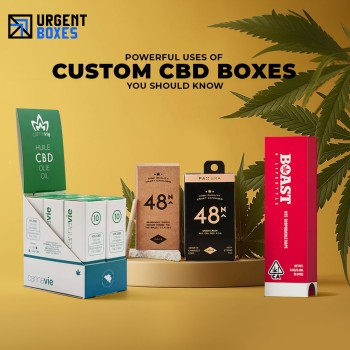
The CBD labels are essential for standing out in this market while building a strong reputation. They provide customers with product knowledge, usage details, and quality verification. Accurate CBD product labeling helps businesses grow and increase profits. The guidelines above offer a clear understanding of CBD labels. If you are ready to customize your packaging, explore Custom CBD Boxes from Urgent Boxes to get expert advice and create designs that strengthen brand perception.